
Only Eating Traditional British Food For a Day in London
Share
Table of Contents
Contents
When I asked my followers what traditional British foods we should try in London, the responses were brutal. "Just avoid British foods. Everything's boiled. It's still gray and it is just muck." I was like: challenge accepted.
TL;DR:
- Black Lock Sunday roast: book a week ahead, order the All-In (George: 9/10, Jasmine: 8/10).
- The Pie Room at Holborn Dining Room: technically competent, overpriced, and underwhelming — skip it (4/10).
- The Devonshire in Soho: suet pudding and sticky toffee pudding were the best things we ate all trip (9.5/10).
- Mrs. Kings at Borough Market: the best pie of the day at £7.50, eaten cold (Jasmine: 8.5/10, George: 7.7/10).
Why Traditional British Food Gets a Bad Reputation (And Why We Disagree)
The reputation precedes itself. Ask any American about British food and you'll get some version of: boiled vegetables, grey meat, wartime rations that never got updated. When I polled my followers before this trip, the consensus was basically "don't bother — just eat the Indian food." We already know London's food scene is exceptional for everything else. Our London Indian food tour through Brick Lane and our Borough Market food tour both delivered. But on this particular day, we had one rule: traditional British only.
Here's the thing: that reputation is outdated. British cooking is grounded in exceptional ingredients handled simply — heritage pork, grass-fed beef, cold-sea seafood, game meats. Sunday roast became a national institution because it works. Suet pudding, meat pies, sticky toffee pudding — these are dishes built on fat, patience, and technique. When they're done right, they're genuinely extraordinary.
The question for our day was which spots would actually do them right.
Stop 1: Black Lock, Canary Wharf — The Sunday Roast
Black Lock is one of the most-booked Sunday roast spots in London. Every reservation I checked was fully booked at least a week in advance across multiple locations. The Canary Wharf location had last-minute availability, and the setting alone surprised me: warm, cozy, unpretentious. George compared it to a Lucille's BBQ, which is exactly the energy you want for a Sunday roast. We also noticed roughly 60–70% of the customers were Asian, which in our experience is a very good sign.
The All-In is £27 per person ($36 USD at our exchange rate). For London, for what you get, that is exceptional value.
The Cauliflower Chop
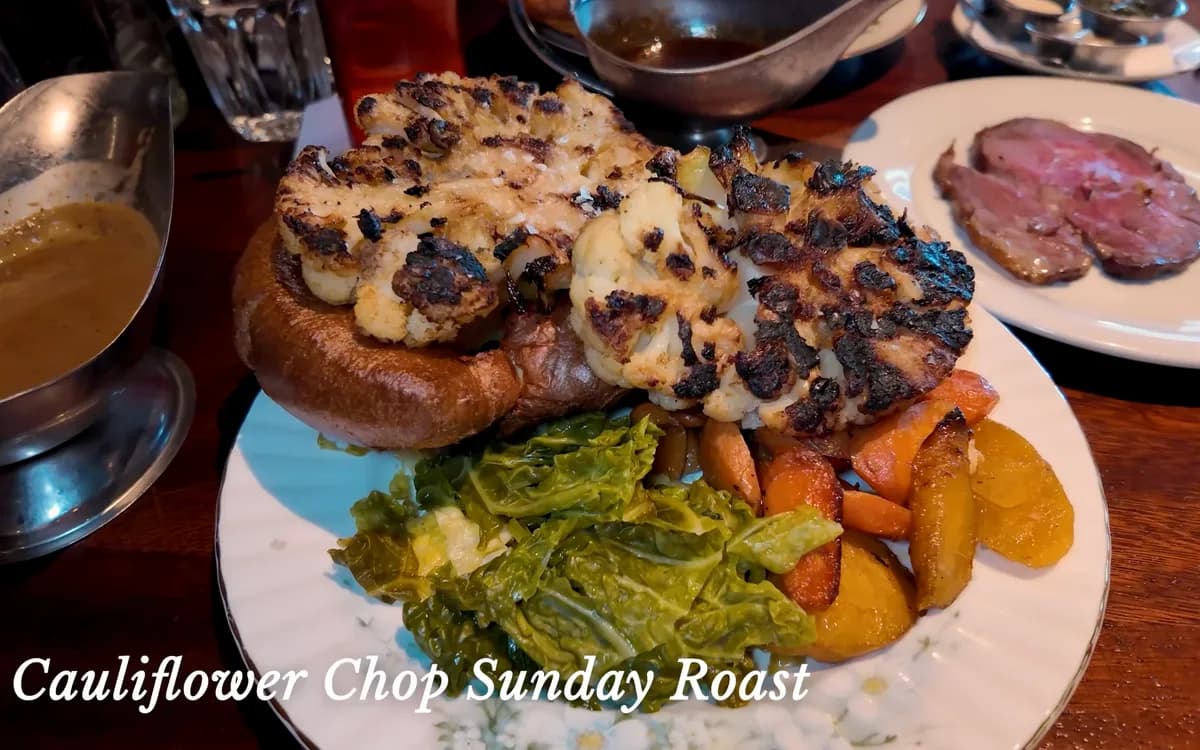
The cauliflower chop was the best dish at Black Lock, and I will not be taking questions.
One side is charred so dark you'd send it back at a lesser restaurant. Don't. There's a garlic-spice rub on the surface that builds with every bite. The other side is perfectly cooked cauliflower with just enough give. Paired with their vegetable gravy — peppery, herby, rich in a way that made George say "can you serve more of this gravy everywhere?" — it was better than most of the meat dishes. I kept picking at it from across the table the entire meal.
The Beef Rump
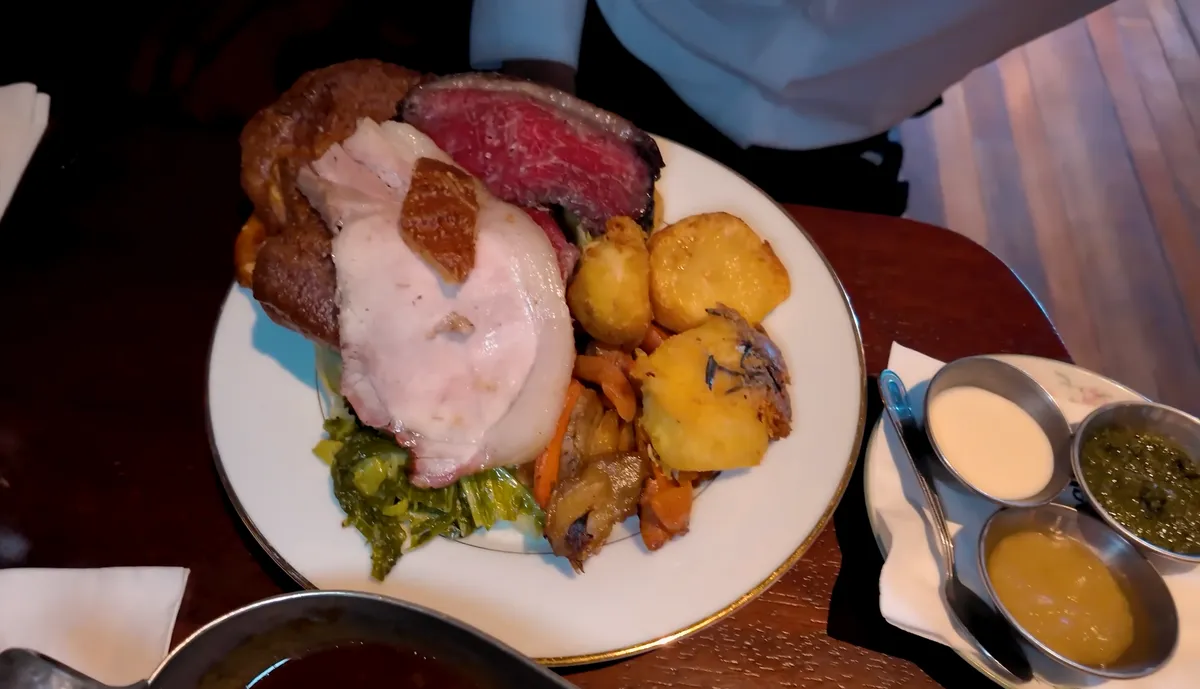
The beef rump tastes like proper steak, and that's the best description I have.
Slow-roasted, maybe a chuck cut, but it eats like a beautifully cooked ribeye: perfectly salted, soft without being mushy, with real depth of flavor. I tried the first few bites with gravy and then pulled back because the meat was that good on its own. George had the same reaction: "I want more. I even want to try some of the vegetables here." For context, George does not typically want vegetables.
The pork was equally strong — thick fat that melted cleanly, crackling on the outside, juicy throughout. The lamb was the one personal miss: technically flawless (tender, juicy, properly cooked), but George and I both need lamb aggressively seasoned to fully love it. Your mileage will vary.
George rated the Sunday roast 9/10. My rating: 8/10. We left stuffed but not gross. That distinction matters after a big roast.
Stop 2: The Pie Room at Holborn Dining Room
The Pie Room shows up on nearly every "best pies in London" list. We went in with high expectations and left giving it a 4/10.
Braised Beef Steak Pie (£36 / ~$48)
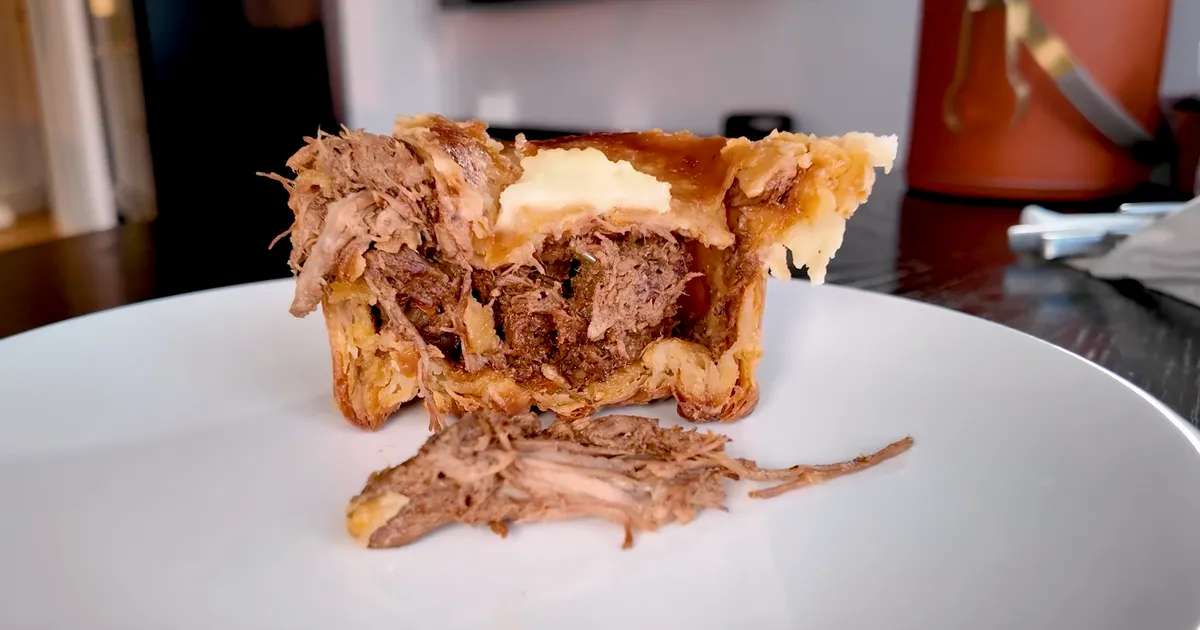
The beef steak pie is well-made and not worth £36. That's the honest take.
Bone marrow, peppercorn, braised beef: the flavors are correct, the beef is cooked properly, the puff pastry arrives crispy. But the ratio is off — it's almost entirely filling with very little crust per bite, which means every mouthful is intensely salty with nothing to balance it. Add their gravy (which we'd been told was essential) and it tips into overwhelming richness. "I'm searching for celery, carrots, onions," George said. "Something to cut through." There is no something.
Norfolk Chicken and Wild Mushroom Pie (£29 / ~$39)
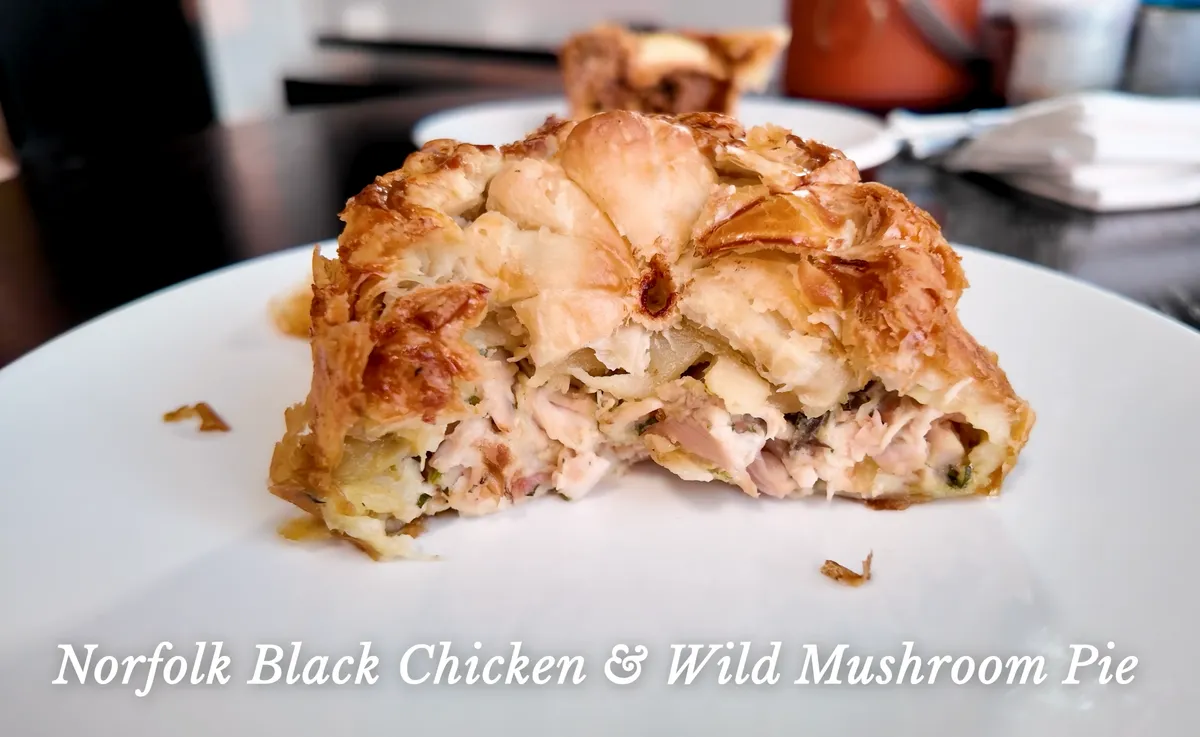
Skip the chicken pie.
The chicken is tender — that part is true. But the tarragon dominates everything else. It's perfumey and herbal in a way that completely buries the chicken. We both agreed: there are too many flavor notes, and none of them are clearly chicken. Jasmine's take: "It's not quite as balanced as the beef one. This one is just — too many things."
Scotch Egg (£19 / ~$25)
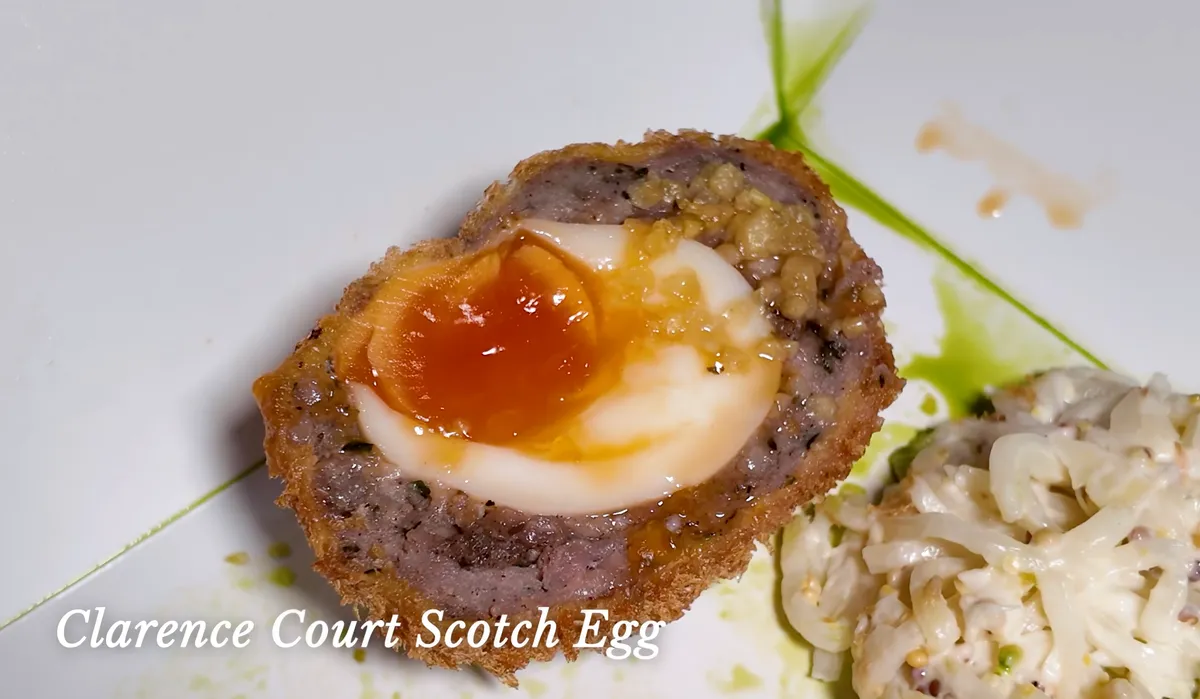
The scotch egg tastes like breakfast sausage, which may be the entire point, but wasn't for us.
The Clarence Court scotch egg has a perfectly jammy soft-boiled center and a fried exterior that was crispy when fresh. It comes with spinach purée and what tasted like a pickled parsnip slaw. If you love breakfast sausage, this is your item. I gave it a 2/10. George was more generous. Neither of us thought it was worth the price.
The Pie Room is a beautiful restaurant with warm, attentive service and food that is executed with real craft. It just has a price tag that demands more than the food delivers.
Stop 3: The Devonshire, Soho — Where British Food Redeemed Itself
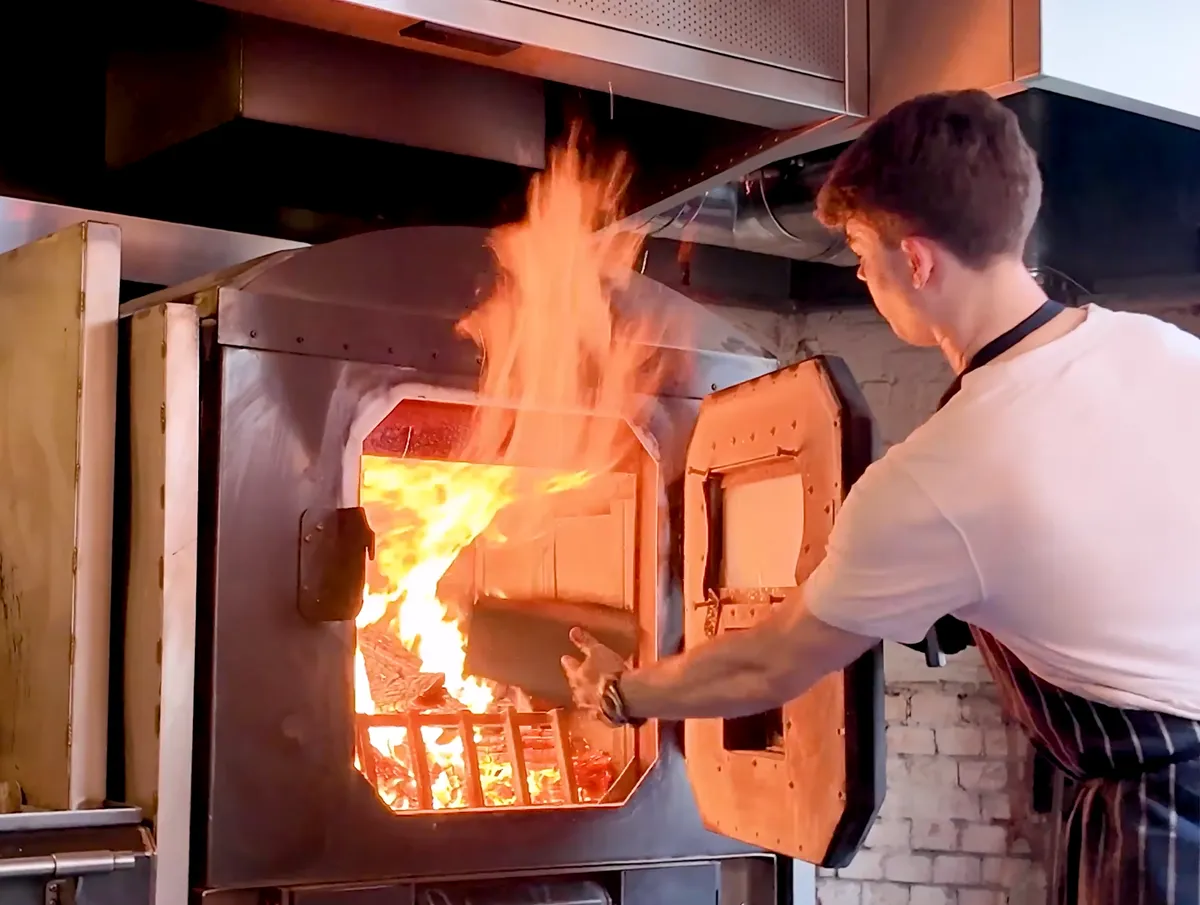
Our food guide — a born-and-bred Londoner — sent us to The Devonshire. It's a Guinness pub with roughly 200 years of history in Soho and a restaurant upstairs running a wood-fired grill, cooking meat and seafood over charcoal in full view of the room. Warm atmosphere, both literally and figuratively, which was welcome on a chilly London evening.
The Ribeye
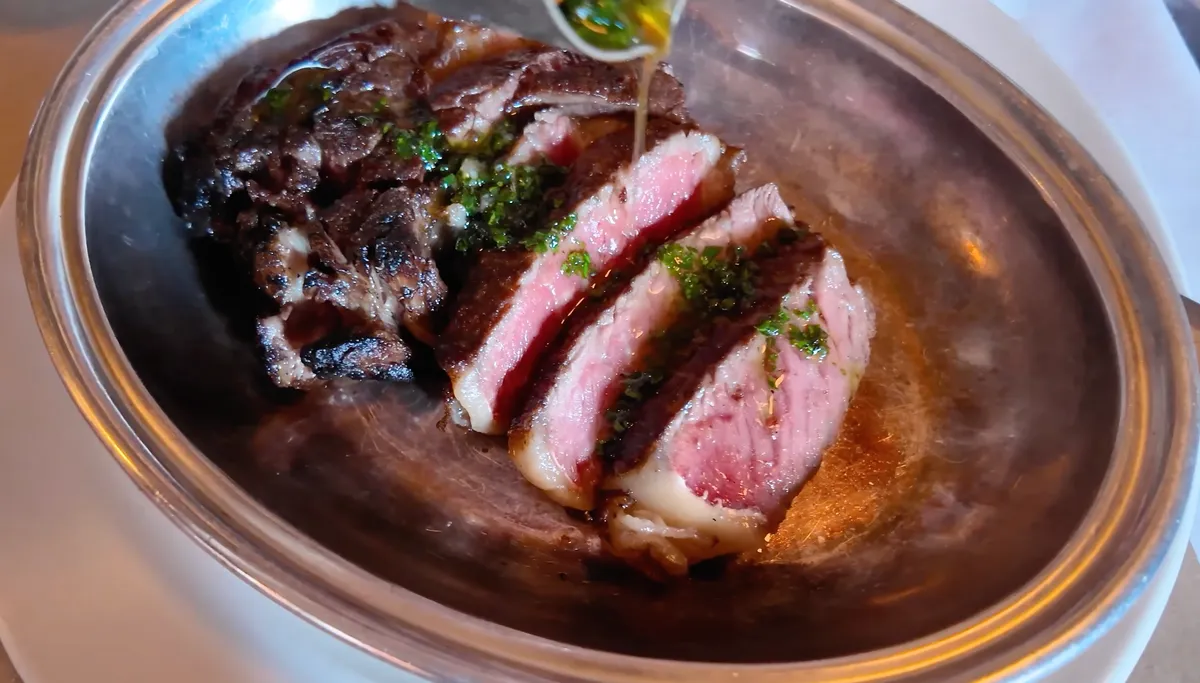 The wood-fired ribeye at The Devonshire is exactly what you want after a disappointing pie experience: cooked medium-rare and actually medium-rare, with a proper char from the coals.
They serve it with a green sauce — not quite chimichurri (no spices, just herbs) but bright and clean and pairs beautifully. George, who doesn't usually order medium-rare anymore, said: "Chimichurri is some of my favorite sauce with steak. This is close enough." High praise.
Beef Cheek and Guinness Suet Pudding
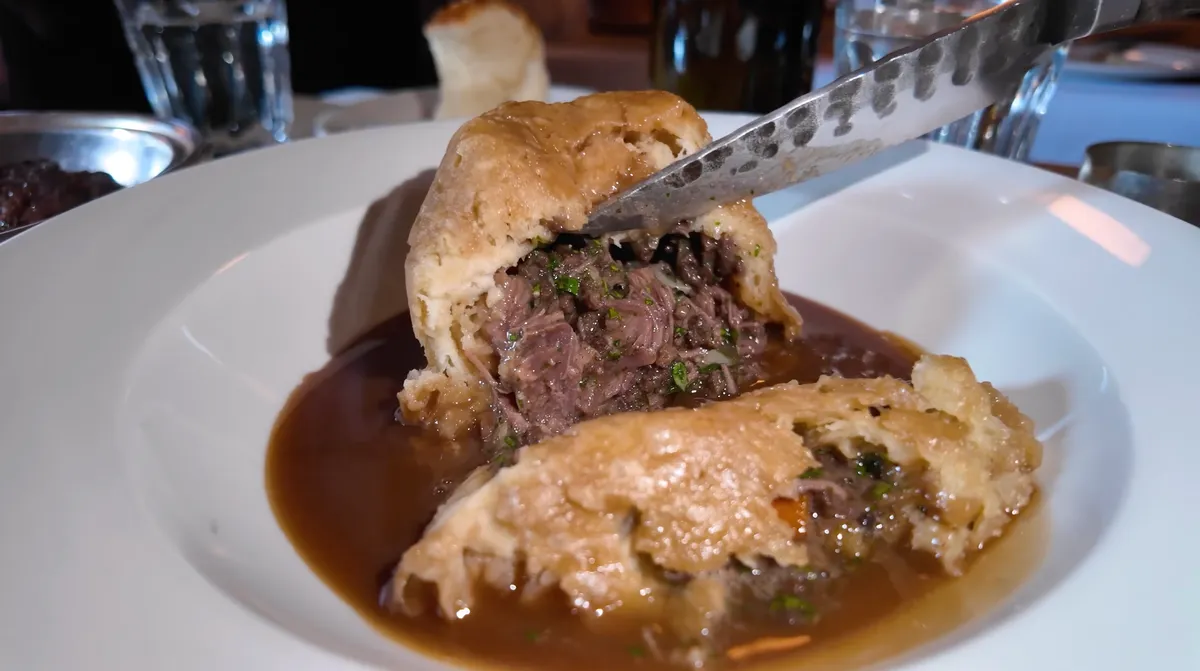
The beef cheek suet pudding is the best thing we ate in London, and I did not know what suet pudding was before this trip.
Here's the explanation for fellow Americans: suet pudding has a steamed crust made with suet (the fat surrounding beef kidneys — don't let that stop you, there is zero kidney flavor). Steaming instead of baking creates a soft, dense, absorbent pastry that soaks up every drop of braising liquid from the filling. Think of the bottom layer of a chicken pot pie that's been fully saturated in gravy, but deeper and richer. It should not work. It absolutely works.
The Devonshire's version is Guinness-braised beef cheek. The beef cheek texture reminded me of cabeza tacos — same cut, same fork-tender richness. The gravy was something George couldn't stop talking about after we'd left: "I can't tell you what it was made of. All I can tell you is I had to eat every last bite."
This dish cost less than the Pie Room's beef pie and was better in every measurable way.
Sticky Toffee Pudding
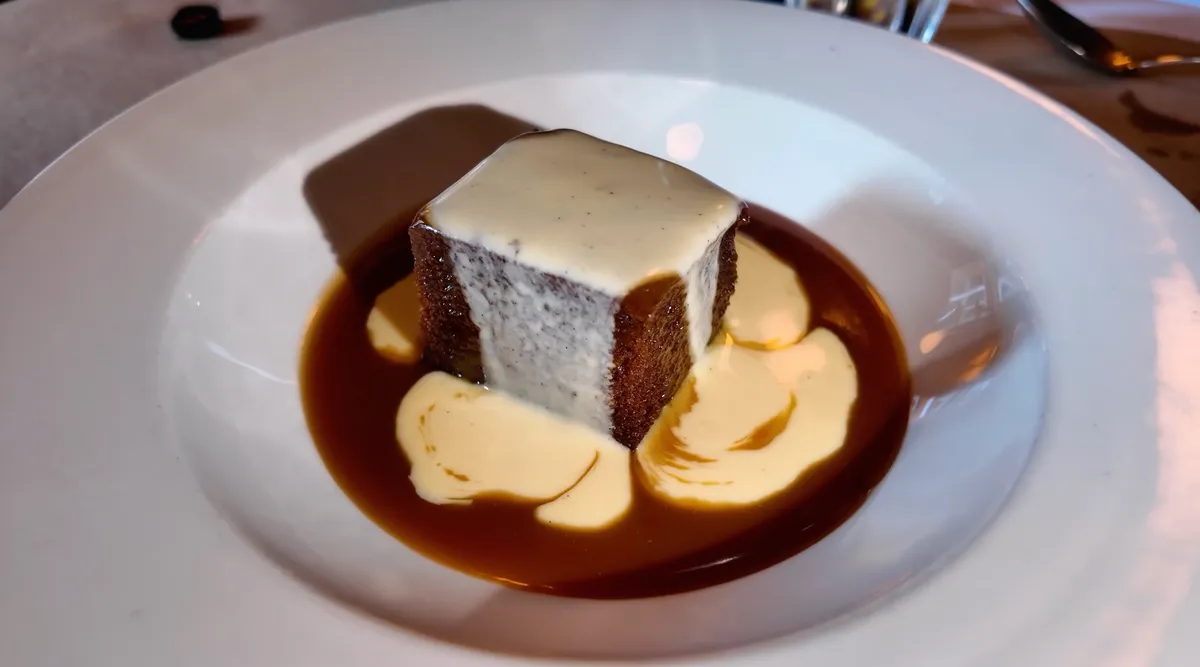
The sticky toffee pudding at The Devonshire is the best we've ever had. No caveats.
Between this trip and a previous London visit, George and I have eaten a lot of sticky toffee pudding. Our server told us the traditional way is with clotted cream, then said he personally prefers the custard. We chose the custard. Correct decision.
The texture is closest to a tres leches: fully saturated, indulgent, somehow still light and airy. Dense in the way you want, not heavy in the way you dread. George gave it a 10/10 and went quiet for the rest of dessert. That's his full review.
Rating for The Devonshire: 9.5/10.
Stop 4: Mrs. Kings at Borough Market — The Cold Pie
Our Londoner guide sent us to Borough Market for one last stop. Mrs. Kings is a small stall with no frills and pies meant to be eaten cold. The man behind the counter was very clear about this.
Pork and Black Pudding Pie (£7.50)
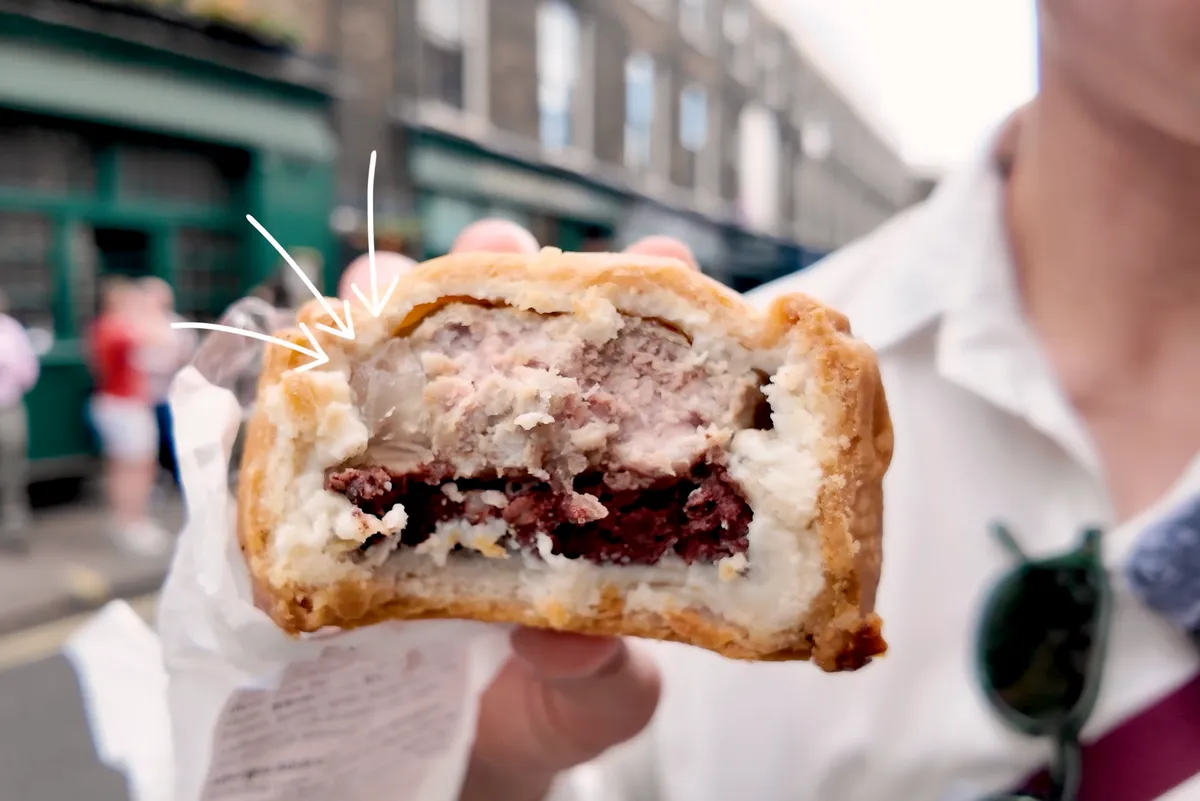
The cold pork and black pudding pie from Mrs. Kings is the best pie we had all day, and it costs £7.50.
Seasoned pork with a layer of black pudding, encased in a hot water crust pastry and surrounded by bone stock jelly. The jelly is the whole game — rich, savory, with the depth of collagen and gelatin that makes soup dumpling fillings so good. It reminded me of making XLB broth at home. The black pudding adds pepper and intensity without overwhelming anything. The hot water crust is crumbly and buttery, not flaky, with real flavor of its own.
Jasmine: 8.5/10. George: 7.7/10. Both of us immediately wanted a second. Both of us are still curious about how it would taste air-fried (the jelly would turn to broth inside), but the man said eat it cold, and we respected the instruction.
Frequently Asked Questions
Is traditional British food actually worth trying in London?
Yes, but the restaurant matters more than with almost any other cuisine. Black Lock and The Devonshire are both genuinely outstanding. The Pie Room, despite its reputation, was a disappointment at that price point. Follow local recommendations over review-site rankings and you'll eat very well.
What is suet pudding and what does it taste like?
Suet pudding is a savory dish with a steamed crust made from suet (beef kidney fat). The result is a soft, dense pastry that absorbs all the braising liquid from the filling — no kidney flavor at all, just beefy, rich, and deeply savory. The closest comparison is a chicken pot pie crust that's been completely soaked in extraordinary gravy.
Is the Black Lock Sunday roast worth booking in advance?
Yes. At £27 per person it's one of the best value meals in London, and you'll need to book at least a week out — every location was fully booked when we checked. Order the All-In and add the cauliflower chop. The veggie gravy is better than the meat gravy. George's rating: 9/10.
Is The Pie Room at Holborn Dining Room worth visiting?
We gave it a 4/10. The food is executed with real craft, but the pricing demands more than the dishes deliver. Both pies had too much filling and not enough crust, with nothing to cut through the richness. Go to Mrs. Kings at Borough Market (£7.50, eaten cold) or The Devonshire for the suet pudding instead.
What should I order at The Devonshire in Soho?
Get the beef cheek and Guinness suet pudding — it was the best dish of the entire trip. Follow it with the sticky toffee pudding and choose custard over clotted cream if your server offers the choice. The wood-fired ribeye is excellent if you want a full meat course.
The Final Verdict
We came as skeptics and left as converts, with one honest caveat: traditional British food doesn't succeed everywhere. The Pie Room showed us that a celebrated, expensive restaurant can still miss. Black Lock, The Devonshire, and Mrs. Kings showed us that when British food works, it really, really works.
For your London itinerary: Black Lock for Sunday roast (book a week ahead), The Devonshire any evening you can get a table, and Mrs. Kings at Borough Market on a Saturday morning. Skip the spots with the most Instagram coverage and ask whoever grew up there.
Traditional British food is not what Americans say it is. It never was.
Frequently Asked Questions
Is traditional British food worth trying in London?
What is suet pudding and what does it taste like?
Is the Black Lock Sunday roast worth booking in advance?
Is The Pie Room at Holborn Dining Room worth visiting?
What should I order at The Devonshire in Soho?

Jasmine Pak
Recipe developer, travel storyteller, and the voice behind Jasmine Belle Pak. Sharing honest guides and tested recipes from around the world.
Related Posts
 travel
We Ate Our Way Through Athens for 4 Days
Athens delivered on every level: a €28 dinner for two, the best seafood pasta we've ever had, and gyros that cost less than a coffee back home.
Read travel
We Did the Ultimate Borough Market Food Tour in London
Sausage rolls, award-winning fish and chips, viral chocolate strawberries, and sticky toffee pudding, and our Borough Market food tour did not disappoint.
Read travel
We Stayed at Marquis Los Cabos for My Birthday
Jasmine's birthday trip to Marquis Los Cabos: four days of all-inclusive dining, pool lounging, spa visits, and honest takes on every restaurant.
Read