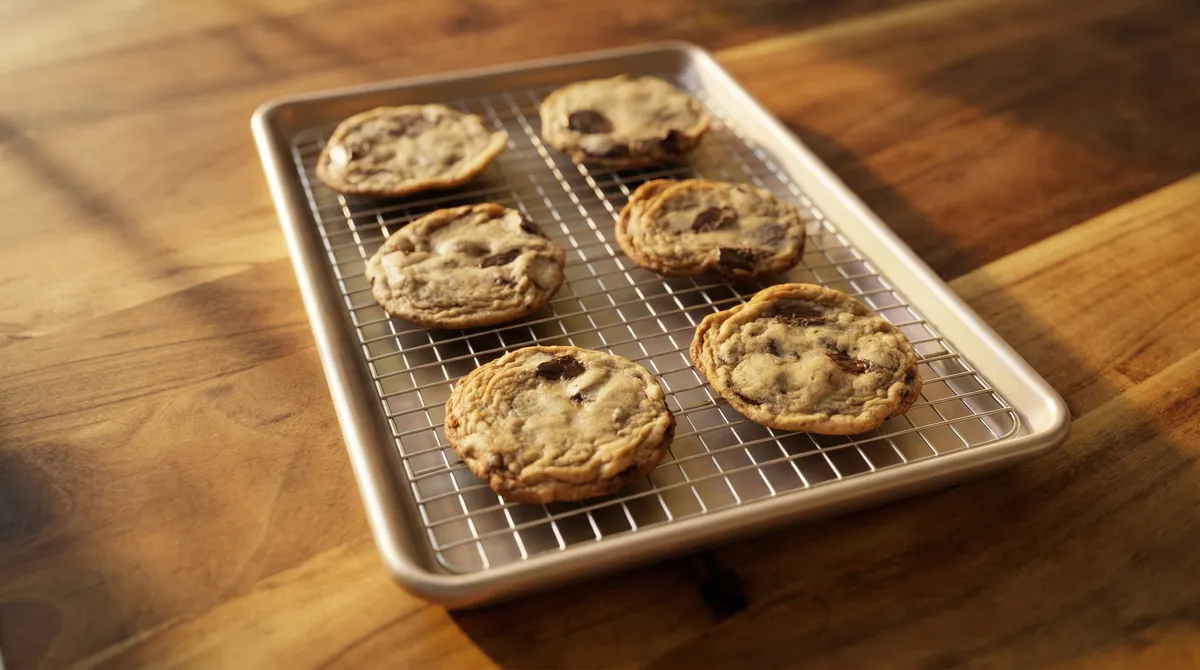
Less Sweet Chewy Dark Chocolate Chip Cookies
Share
Table of Contents
Contents
Finally, here it is! My favorite way to make less sweet chewy dark chocolate chip cookies. I highly recommend chilling them in the fridge for 48 hours, but if you don't have the time, 30 minutes to 1 hour is definitely a must. If you'd like to make it even less sweet, reduce both sugars by 1/4 cup.
TL;DR: Less sweet chewy dark chocolate chip cookies — made with melted butter (for chewy texture), a brown-sugar-heavy ratio (for molasses depth), and 60–70% dark chocolate (for complex bittersweet flavor). Chill the dough 48 hours for the best result, or 30 minutes minimum. Bake at 350°F for 10–12 minutes until edges are golden but centers look slightly underdone. Cool 5 minutes on the pan before transferring.
The Origin of the Chocolate Chip Cookie
The chocolate chip cookie was invented entirely by accident. In 1938, Ruth Graves Wakefield — a dietitian and food lecturer who ran the Toll House Inn in Whitman, Massachusetts — was preparing her popular Butter Drop Do cookies when she broke a bar of Nestlé semi-sweet chocolate into pieces and mixed them into the dough. She expected the chocolate to melt completely and create a uniform chocolate cookie. Instead, the chunks held their shape, softening just enough to create pockets of melted chocolate throughout each bite.
The cookies were an instant hit with her guests, and the recipe quickly spread through word of mouth. Nestlé took notice when sales of their semi-sweet chocolate bars surged in the New England area. Andrew Nestlé struck a deal with Wakefield: in exchange for a lifetime supply of chocolate, Nestlé would print her recipe on every bar. By 1939, Nestlé began scoring their chocolate bars for easier breaking, and by 1941 they introduced the pre-made chocolate morsels we know today.
What started as a happy accident at a small Massachusetts inn became one of the most beloved baked goods in American history. Every homemade batch owes something to Ruth Wakefield's willingness to experiment — and this recipe is my twist on her legacy, dialing back the sweetness and leaning into dark chocolate for a more complex, grown-up flavor.
Step-by-Step Walkthrough
Prep Your Oven and Baking Sheet
Preheat your oven to 350°F (175°C) and line a baking sheet with parchment paper or a silicone baking mat. I prefer parchment for easier cleanup, but a silicone mat gives you slightly more even browning on the bottom. Make sure your oven is fully preheated before the cookies go in — an oven that hasn't reached temperature will give you flat, spread-out cookies instead of thick chewy ones.
Mix the Sugars and Butter
In a large mixing bowl, combine the granulated sugar, brown sugar, and salt, then pour in the melted butter. Mix until smooth and creamy. Using melted butter instead of softened is key here — it creates a denser, chewier texture. The brown sugar is doing a lot of heavy lifting in this recipe. Its molasses content adds moisture and that signature chewy pull. If you want even less sweetness, you can reduce both sugars by ¼ cup without affecting the texture too much.
Add the Eggs and Vanilla
Beat in the eggs one at a time, mixing well after each addition. This helps emulsify the dough and creates a smoother consistency. Then add the vanilla extract and mix until fully incorporated. Use real vanilla extract here, not imitation — you'll taste the difference, especially with the reduced sugar letting other flavors come through.
Combine the Dry Ingredients
In a separate bowl, whisk together the all-purpose flour and baking soda. Whisking aerates the flour and distributes the baking soda evenly, which means more consistent rise across every cookie. Don't skip this step — clumps of baking soda in the finished cookie taste metallic and bitter.
Bring the Dough Together
Gradually add the dry ingredients to the wet mixture, mixing until just combined. This is where most people go wrong — overmixing develops the gluten in the flour, which makes your cookies tough and cakey instead of tender and chewy. Stop as soon as you don't see any dry flour streaks. A few small lumps are perfectly fine.
Fold in the Chocolate
Gently fold in the dark chocolate chips until evenly distributed throughout the dough. I use 10 oz as a starting point, but honestly, more is always welcome. Dark chocolate (60-70% cacao) is the move here — it pairs better with the reduced sugar and adds a slight bitterness that balances the brown sugar's caramel notes. If you can find chocolate discs or fèves instead of standard chips, they melt into thinner, more dramatic pools.
Chill the Dough
This is the most important step and the one most people skip. Chill your dough for at least 30 minutes, but ideally 48 hours. During that rest, the flour fully hydrates, the butter re-solidifies, and the sugars concentrate. The result is a cookie that spreads less, browns more evenly, and develops a deeper, almost toffee-like flavor. If you're chilling for the full 48 hours, cover the bowl tightly with plastic wrap or transfer the dough to an airtight container.
Portion and Arrange
Using a 2.5 tablespoon cookie scoop or spoon, portion out the dough and place them on the prepared baking sheet. Leave about 2 inches between each cookie to allow for spreading. A cookie scoop gives you uniform sizes, which means every cookie bakes at the same rate — no more burnt edges on one while the next is still raw in the middle. For extra-thick cookies, roll each portion into a tall ball rather than flattening it.
Bake
Bake in the preheated oven for 10-12 minutes, or until the edges are golden brown but the centers are still soft and slightly underdone. They'll look like they need another minute — that's exactly when you pull them out. The residual heat from the pan continues cooking them as they cool. If you wait until they look done in the oven, they'll be overbaked by the time they reach room temperature.
Cool and Enjoy
Allow the cookies to cool on the baking sheet for 5 minutes before transferring them to a wire rack to cool completely. Those first 5 minutes on the hot pan are crucial — the cookies firm up and set their shape during this time. If you try to move them too early, they'll fall apart. After the wire rack, you're looking at a cookie with crisp edges, a chewy center, and pools of dark chocolate in every bite.
Tips for the Best Dark Chocolate Chip Cookies
- Don't skip the chill — the single biggest variable for texture and flavor. 48 hours is ideal; 30 minutes is the minimum.
- Weigh your flour — 2½ cups is roughly 313g. Too much flour is the #1 cause of dry, cakey cookies. A kitchen scale fixes this permanently.
- Underbake by 30 seconds — pull them when the centers still look slightly raw. They firm up on the pan from residual heat.
- Use chocolate discs or feves — if you can find them (Guittard, Callebaut, Valrhona), they melt into dramatic pools instead of staying as discrete chips.
- Flaky salt on top — sprinkle Maldon on each ball before baking. The contrast between bitter dark chocolate, caramel brown sugar, and crunchy salt is the move.
- More cookies to try — if you love these, also make soft and chewy black sesame cookies for a nutty twist, or mango cheesecake for a no-bake dessert option.
Frequently Asked Questions
Why do I need to chill chocolate chip cookie dough?
Chilling dough — ideally for 48 hours — lets the flour fully hydrate, the butter re-solidify, and the sugars concentrate. The result is a cookie that spreads less, browns more evenly, and develops a deeper, almost toffee-like flavor. 30 minutes minimum; 48 hours is the chef's-kiss version. Skip the chill and you'll get flat, pale, bland cookies that spread into one giant sheet.
Why does this recipe use melted butter instead of softened?
Melted butter creates a denser, chewier cookie. Softened butter whips air into the dough when creamed with sugar, which gives you a lighter, cakier texture — great for some cookies, wrong for this one. Melted butter coats the flour more completely and traps less air, which is exactly what you want for a chewy, fudgy cookie with that signature pull.
Can I freeze chocolate chip cookie dough?
Yes — this is the best way to have fresh cookies on demand. Portion the dough into balls, arrange on a tray, and freeze solid (2 hours). Transfer frozen balls to a zip-top bag and freeze up to 3 months. Bake straight from frozen at 350°F, adding 2–3 minutes to the bake time. No need to thaw.
Why does this cookie use both brown sugar and white sugar?
The two sugars do different jobs. Brown sugar has molasses, which adds moisture and that signature chewy pull — it's also what gives the cookie its caramel flavor. White sugar helps the cookies spread and crisp at the edges. The brown-sugar-heavy ratio in this recipe (1¼ cups brown to ¾ cup white) leans into chewy over crispy.
Can I use milk chocolate or semi-sweet chips instead of dark chocolate?
Yes, but the recipe is specifically designed around dark chocolate (60–70% cacao) to balance the reduced sugar. Milk or semi-sweet chips will make the cookie sweeter overall — which is fine, but the flavor profile shifts from complex and grown-up to classic-nostalgic. If you swap, consider cutting the brown sugar by another ¼ cup.
Less Sweet Dark Chocolate Chip Cookies
Author: Jasmine Pak
Ingredients
- ¾ cup granulated sugar
- 1 ¼ cups brown sugar, packed
- 1 teaspoon salt
- 1 cup unsalted butter, melted
- 2 large eggs
- 2 teaspoons vanilla extract
- 2 ½ cups all-purpose flour
- 1 teaspoon baking soda
- 10 oz dark chocolate chips (adjust to preference)
Instructions
- Preheat your oven to 350°F (175°C). Line a baking sheet with parchment paper or a silicone baking mat.
- In a large mixing bowl, combine the granulated sugar, brown sugar, and salt. Add the melted butter and mix until smooth and creamy.
- Beat in the eggs, one at a time, mixing well after each addition. Add the vanilla extract and mix until fully incorporated.
- In a separate bowl, whisk together the all-purpose flour and baking soda.
- Gradually add the dry ingredients to the wet mixture, mixing until just combined. Be careful not to overmix.
- Gently fold in the dark chocolate chunks until evenly distributed throughout the dough.
- Chill dough for 48 hours or at least 30 minutes.
- Using a 2.5 tablespoon cookie scoop or spoon, portion out the dough and place them on the prepared baking sheet, leaving some space between each cookie to allow for spreading.
- Bake in the preheated oven for 10-12 minutes, or until the edges are golden brown but the centers are still soft.
- Allow the cookies to cool on the baking sheet for 5 minutes before transferring them to a wire rack to cool completely.
Did you make this recipe?
Tag @jasminepak on Instagram!
Frequently Asked Questions
Why do I need to chill chocolate chip cookie dough?
Why does this recipe use melted butter instead of softened?
Can I freeze chocolate chip cookie dough?
Why does this cookie use both brown sugar and white sugar?
Can I use milk chocolate or semi-sweet chips instead of dark chocolate?
Jasmine Pak
Recipe developer, travel storyteller, and the voice behind Jasmine Belle Pak. Sharing honest guides and tested recipes from around the world.
Related Posts
 recipes
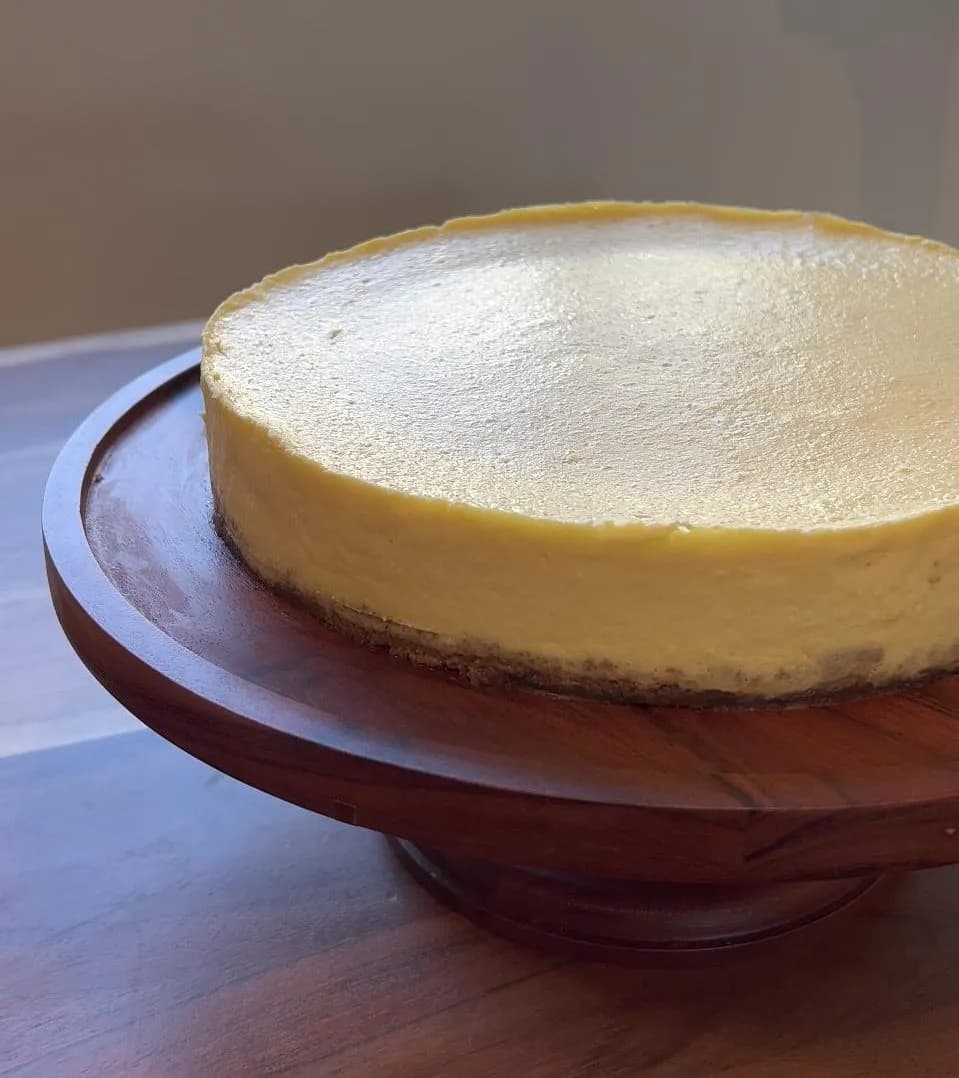
The Best Mango Cheesecake You've Never Had
Mango cheesecake with a brown sugar graham crust and creamy mango-forward filling. Water-bath baked for a crack-free top, with tips for ripe Alphonso mango selection.
Read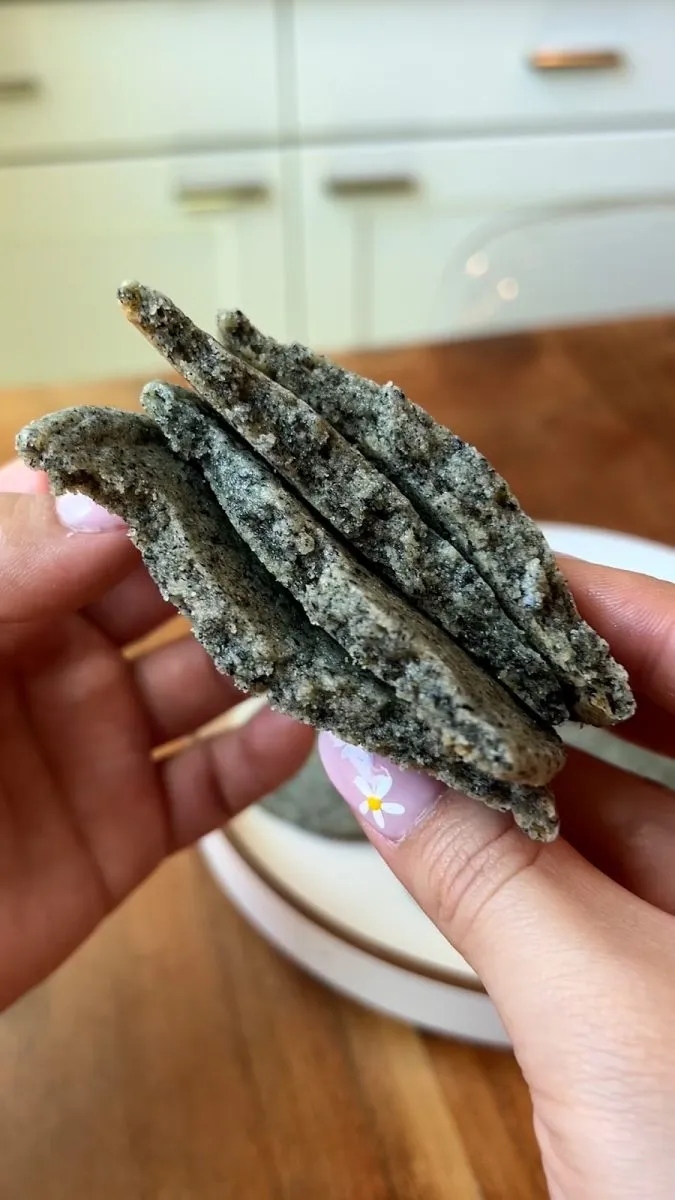 recipes
Make Way for Soft and Chewy Black Sesame Cookies
Hey everyone! I’m so excited to share my recipe for Soft and Chewy Black Sesame Cookies! I went through over 20 batches of these cookies to get them to ...
Read recipes
Recreating Disneyland's Ronto-Less Garden Wrap at Home
Jasmine's copycat of Disneyland's famous Ronto-Less Garden Wrap: gochujang mayo, kimchi slaw, sweet pickled cucumbers, and grilled beef patties in warm pita.
Read