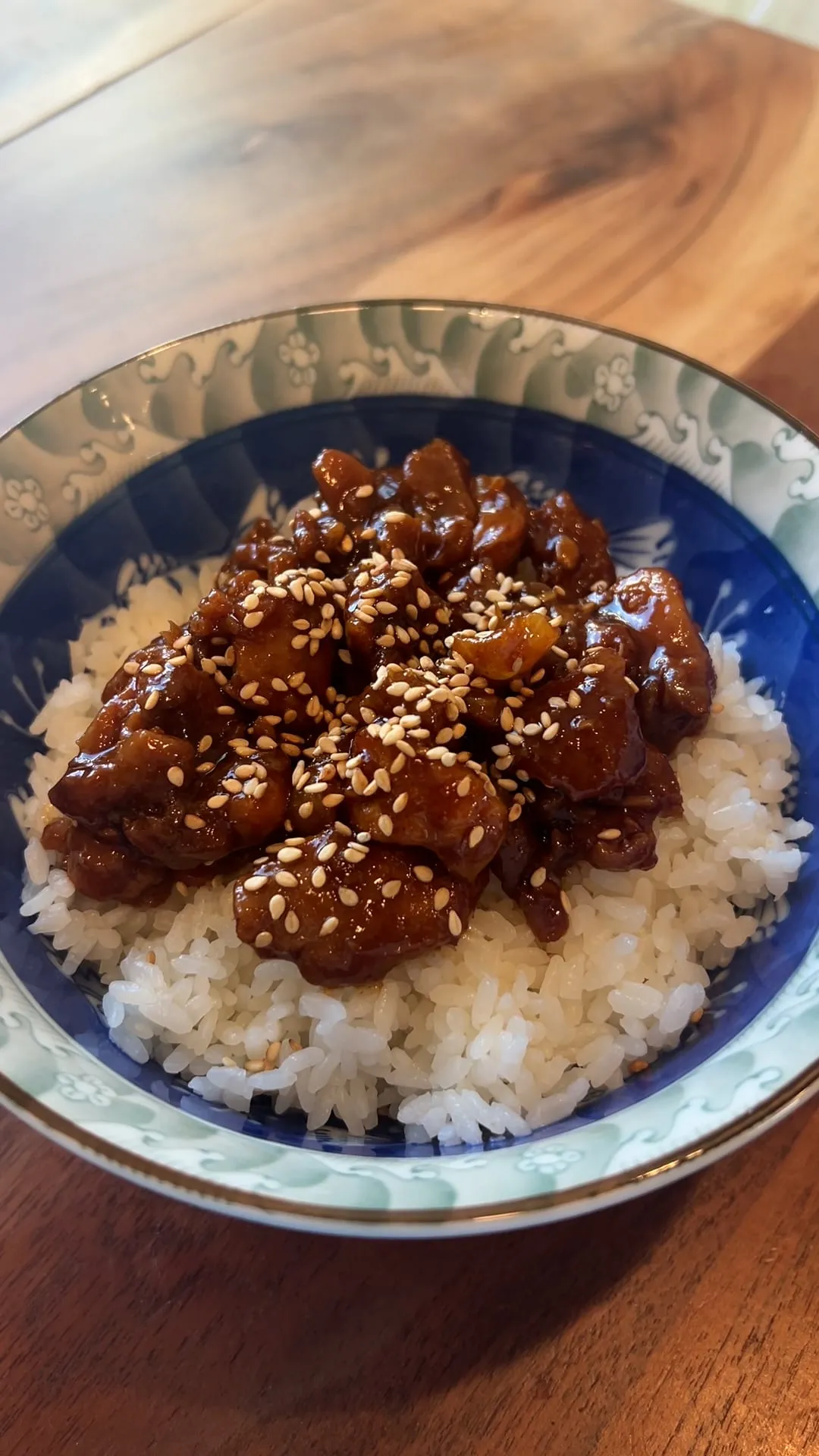
This Spicy Korean Chicken Rice Bowl is Bold and Delicious
Share
Table of Contents
Contents
Looking for a dish that ticks all the boxes for flavor, ease, and satisfaction? My Korean Spicy Chicken Bowl is your answer. This spicy Korean chicken rice bowl is a gochujang and gochugaru-sauced chicken deopbap that's ready in 25 minutes. Born from the desire to create a protein-packed meal that wouldn't compromise on taste, this recipe has become a staple in our home. Both my fiancé, George, and I are currently trying to achieve our fitness goals as we prepare for our wedding. Of course there is no mandate for needing to get fit for your wedding, but we both want to feel our best for big day and this Spicy Korean Chicken Rice bowl has been on repeat since George is bulking, and I am cutting. George loves to eat it with a big bowl of rice, and I love to eat it with some butter leaf lettuce. Fitness goals aside, this dish is good as hell! It’s a crowdpleaser! It’s an easy weeknight dinner or meal prep dish that’s sure to keep your tastebuds happy! For a Vegetarian option, try cubed pan-fried tofu, cauliflower, or button mushrooms! The consistency of these ingredients holds the sauce well and will guarantee a juicy delicious bite!
TL;DR: This spicy Korean chicken rice bowl (chicken deopbap) is a 25-minute weeknight dinner — sear bite-sized chicken thighs, toss in a gochujang-gochugaru sauce, reduce to a sticky glaze, and serve over rice with sesame seeds. High protein, bold flavor, minimal effort.
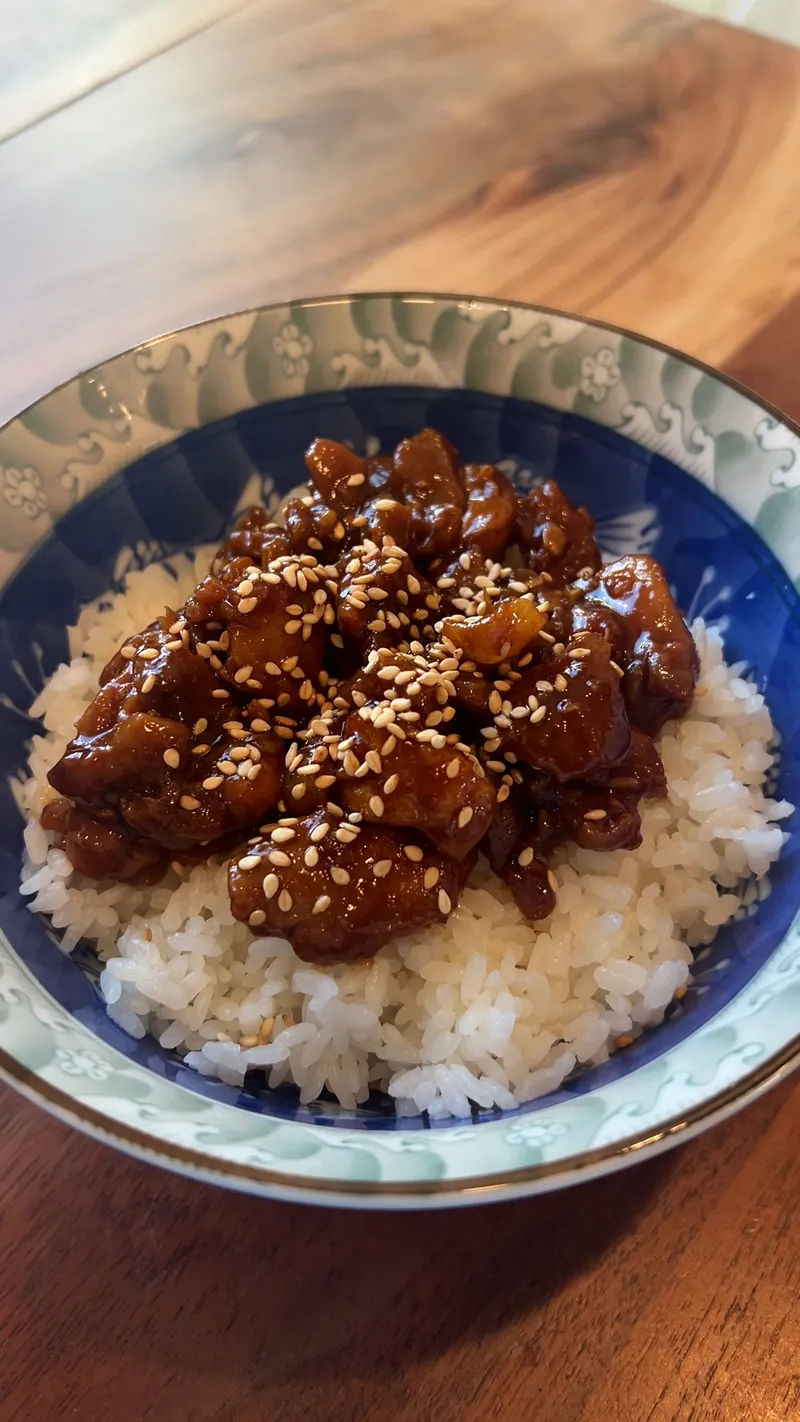
What Is Deopbap?
Deopbap (덮밥) literally means "covered rice" in Korean — "deopda" (to cover) plus "bap" (rice). It's a broad category of Korean rice bowls where a saucy topping is spooned directly over steamed rice. Think of it as the Korean answer to a rice bowl, but with a focus on the sauce glazing the protein rather than a separate dressing on the side.
This chicken deopbap recipe falls into the spicy category, using gochujang (fermented chili paste) and gochugaru (Korean chili flakes) as the heat base. The double-chili approach gives you both the deep fermented kick from the gochujang and the smoky, flaky heat from the gochugaru — that's what separates a Korean spicy chicken bowl from a generic hot sauce situation.
You'll also see deopbap made with bulgogi, pork, seafood, and even tofu. It's one of the most popular quick meals in Korea, especially among college students and anyone who wants maximum flavor with minimum dishes to wash. One pan, one bowl, done.
Step-by-Step Walkthrough
Prep the Chicken
Cut your chicken thighs into bite-sized pieces, roughly 1-inch cubes. I use skin-on thighs because the skin crisps up during searing and adds texture, but skinless thighs or even chicken breast work fine if you're watching your macros. Pat the pieces dry with paper towels before they hit the pan — dry chicken sears, wet chicken steams, and steamed chicken in a sticky sauce is not the vibe.
Make the Sauce
While the chicken cooks, mix the sauce in a small bowl. The lineup: plum syrup (or honey) for sweetness, gochujang for that fermented chili depth, gochugaru for smoky heat, mirin for a subtle rice-wine sweetness, soy sauce for salt, oyster sauce for umami, and both chicken bouillon powder and dasida (Korean beef bouillon) for an extra layer of savory depth. It sounds like a lot of ingredients, but you're just dumping and stirring — it takes 2 minutes. Taste it before it hits the pan. Want more heat? Add another tablespoon of gochugaru. Prefer it sweeter? Bump up the plum syrup.
Cook and Coat
Once your chicken is browned on all sides — you want some golden color, not just cooked through — pour the sauce directly into the pan. Toss everything until every piece is coated. Drop the heat to medium-low and let the sauce reduce for a few minutes until it thickens into a sticky glaze that clings to the chicken. Don't rush this part. The sauce should coat the back of a spoon when it's ready. If it gets too thick, splash in a tablespoon of water to loosen it up.
Assemble the Bowl
Scoop the chicken over a bowl of steamed rice and pour any extra sauce from the pan on top. Hit it with toasted sesame seeds and a few leaves of butter lettuce or romaine on the side. The lettuce gives you a cool, crunchy contrast to the spicy chicken — I like wrapping a piece of chicken in a lettuce leaf for a little ssam-style bite. If you want to go all out, add a fried egg on top, some pickled radish, sliced cucumbers, or a drizzle of sesame oil.
Tips for the Best Korean Chicken Rice Bowl
- Chicken thighs vs. breast: Thighs are juicier and more forgiving — they won't dry out if you cook them an extra minute. Breast is leaner and works great if you're meal prepping for macros. Cut breast pieces slightly smaller so they cook evenly.
- Spice level: Gochujang and gochugaru do different things. Gochujang is the fermented backbone — salty, sweet, and deeply spicy. Gochugaru is the surface heat — smoky and flaky. Reduce the gochugaru first if you want less heat but keep the flavor complex. For mild, skip the gochugaru entirely and use 1 tablespoon of gochujang.
- Meal prep: This chicken deopbap recipe is perfect for meal prep. Cook a big batch of chicken and sauce, portion into containers with rice, and refrigerate for up to 4 days. Reheat in a pan (not the microwave) to keep the sauce sticky instead of watery. The sauce actually deepens in flavor overnight.
- Vegetarian swap: Cubed extra-firm tofu, cauliflower florets, or button mushrooms all hold the sauce well. Press tofu for 15 minutes first, then pan-fry until golden on each side before adding the sauce. Serve alongside banchan like Korean cucumber salad (oi muchim) or bean sprout banchan for a full spread.
Frequently Asked Questions
What is the difference between deopbap and bibimbap?
Deopbap (덮밥) means "covered rice" — a saucy topping spooned over steamed rice so the sauce soaks in. Bibimbap (비빔밥) means "mixed rice" and comes with separate vegetables and protein that you stir together with gochujang before eating. Deopbap is about one sauced topping; bibimbap is about mixing components. This spicy chicken recipe is a deopbap — the sauce coats the chicken and glazes the rice underneath.
What can I substitute for gochujang?
Mix 1 tablespoon white miso paste with 1 tablespoon sriracha and 1 teaspoon sugar for the closest substitute — you get the fermented depth plus the heat in one move. In a pinch, use sambal oelek or Thai chili paste with a little miso and sugar. The flavor won't be identical (gochujang has a specific sweet-fermented-chili character that's hard to replicate), but it'll carry the dish.
How do you store leftover Korean chicken rice bowl?
Store the chicken and sauce in an airtight container in the refrigerator for up to 4 days. Keep the rice in a separate container so it doesn't absorb all the sauce and get mushy. Reheat the chicken in a pan over medium heat with a splash of water to revive the glaze — microwaving works but the sauce loses its sticky texture.
Is this spicy Korean chicken rice bowl gluten-free?
Not as written — soy sauce and oyster sauce both contain wheat. Swap in tamari or a certified gluten-free soy sauce, and use a gluten-free oyster sauce (Lee Kum Kee makes one). The rest of the ingredients are naturally gluten-free. Also check your gochujang — most brands are gluten-free, but some contain wheat, so read the label.
Spicy Korean Chicken Rice Bowl
Author: Jasmine Pak
Ingredients
Chicken:
- 2 lbs chicken thighs, cut into bite sized pieces (I like skin on, but feel free to use skinless or chicken breast)
- Toasted Sesame Seeds to taste
- Red butter leaf lettuce (sub romaine)
Sauce:
- 3 tbsp plum syrup (sub honey)
- 2 tbsp minced garlic
- 2 tbsp Gochugaru Powder (Or to taste) *optional
- 2 tbsp Gochujang
- 2 tbsp sugar (I use Monkfruit Sweetener)
- 2 tbsp Mirin
- 2 tbsp Soy Sauce
- 1 tbsp Oyster Sauce
- 1 tbsp Chicken Bouillon Powder
- 1 tbsp Dasida (Korean beef bouillon powder)
Instructions
- Add chicken to a large pan over medium high heat and cook until browned.
- Make the sauce. Add plum syrup, minced garlic, gochugaru powder, gochujang sweetener of choice, mirin, soy sauce, oyster sauce, chicken bouillon powder, and Dasida to a small bowl and mix well.
- Return the pan and pour the sauce over the chicken. Toss until chicken is evenly coated in sauce.
- Lower the heat to medium or medium low and cook until sauce is reduced to a thicker consistency.
- Scoop chicken over rice and top with toasted sesame seeds and lettuce.
Did you make this recipe?
Tag @jasminepak on Instagram!
Frequently Asked Questions
What is the difference between deopbap and bibimbap?
What can I substitute for gochujang?
How do you store leftover Korean chicken rice bowl?
Is this spicy Korean chicken rice bowl gluten-free?

Jasmine Pak
Recipe developer, travel storyteller, and the voice behind Jasmine Belle Pak. Sharing honest guides and tested recipes from around the world.
Related Posts
 recipes
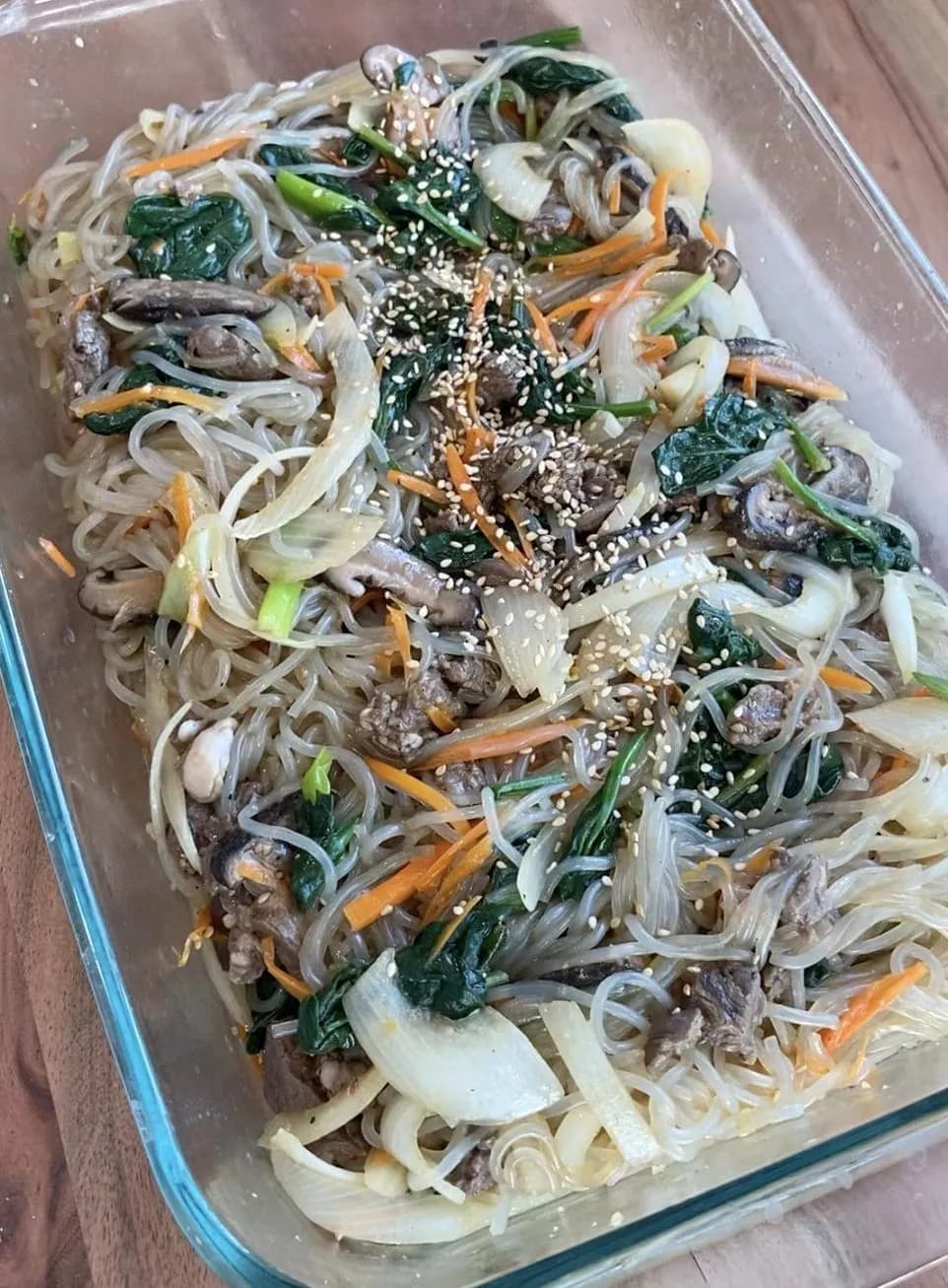
This Japchae (Korean Glass Noodle Stir-Fry) Will Shine at Any Potluck
Japchae is a popular side dish and is a glass noodle stir fry. If you go to any family event, I assure you that a huge foil tray filled with japchae wil...
Read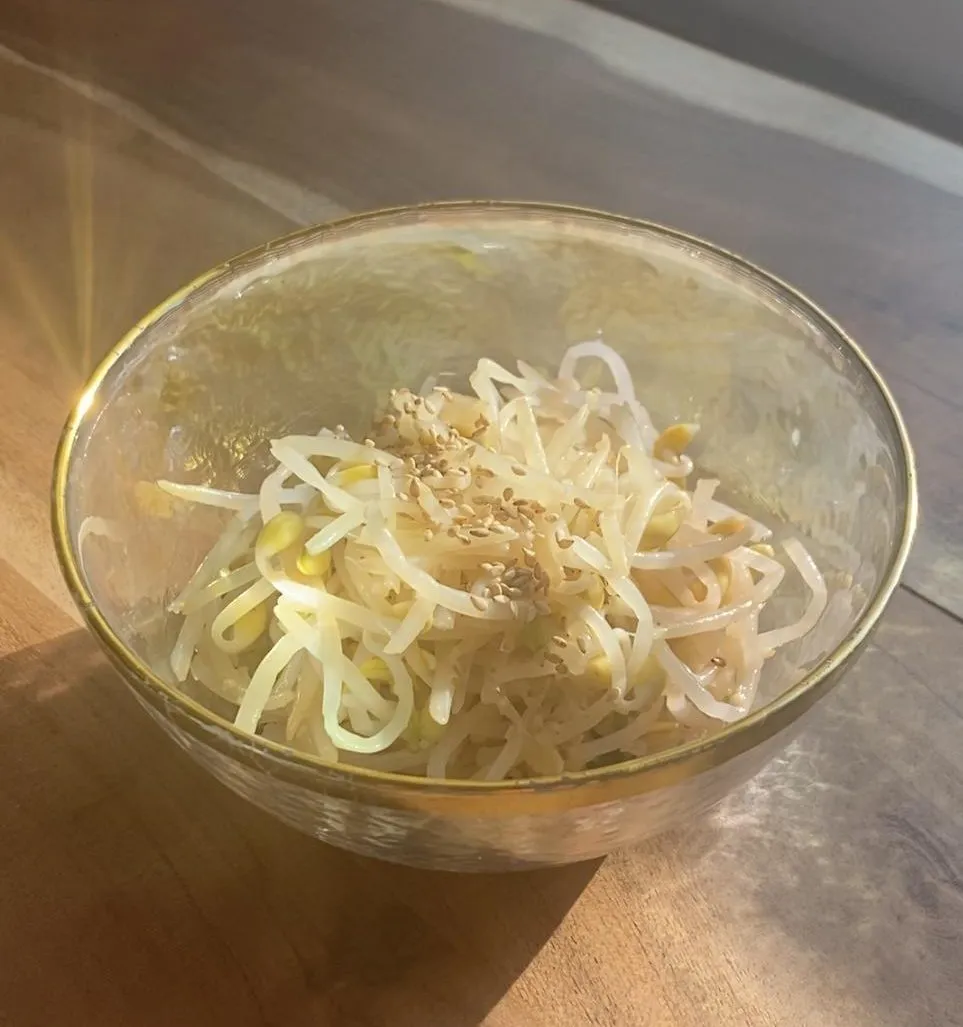 recipes
Make the Korean Bean Sprouts Banchan You See at KBBQ
Make Korean bean sprout banchan (kongnamul muchim) in minutes — a simple, sesame-tossed side dish you'll recognize from every KBBQ spread.
Read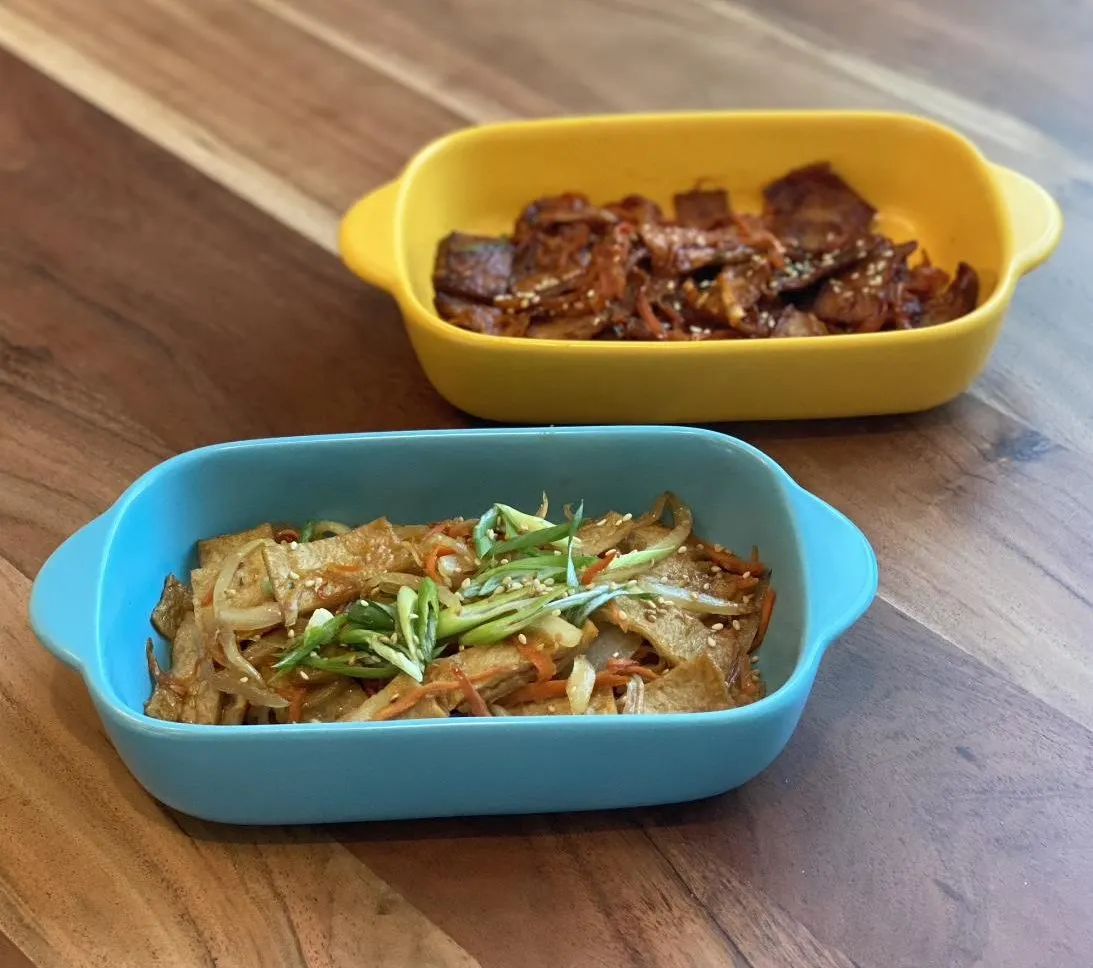 recipes
Easy to Make Korean Stir-fried Fish Cake (Eomuk Bokkeum)
Make this easy Korean fishcake banchan (eomuk bokkeum) in under 15 minutes. Sweet, savory stir-fried fish cake — a must-have banchan for any Korean meal.
Read